
“To contemplate an individual in their wholeness, we should explore their mind, body and soul.”— Natalia Zavislak
At Mind, Body, and Spirit TeleTherapy, we believe that a person cannot be fully understood by looking at symptoms, circumstances, or individual parts of their story in isolation.
To contemplate an individual in their wholeness, we must make space for the mind, body, and soul—while also recognizing the relationships, culture, family history, environment, identity, and life experiences that shape who we are.
“Everything looked so good on the computer, and yet what Father had gotten was not Medicine but Healthcare—Medicine without a soul.”— Victoria Sweet, MD, Slow Medicine: The Way to Healing
This distinction speaks deeply to our philosophy.
Modern healthcare can sometimes divide a human story into separate pieces: symptoms, diagnoses, behaviors, histories, and checklists. While these perspectives can be valuable, we believe healing also requires something more: the presence of the whole person.
Our Philosophy: Bridging Worlds
Our philosophy is rooted in wholeness.
We believe that healing happens when we begin to reconnect the parts of ourselves that have become separated—mind and body, psychology and spirituality, personal experience and cultural identity, past and present, and the person we have been with the person we are becoming.
This is what we mean by Bridging Worlds.
Our approach brings together different perspectives and dimensions of healing while honoring the uniqueness of each person's journey.
We recognize three essential dimensions of healing:
Medicine for the Soul
The soul speaks to the deeper dimensions of our experience—meaning, purpose, spirituality, connection, intuition, values, and the search for something greater than ourselves.
For some, healing involves reconnecting with spirituality. For others, it may mean rediscovering purpose, listening to their inner wisdom, reconnecting with nature, or finding meaning in a profound life transition.
Medicine for the Mind
The mind encompasses our thoughts, emotions, memories, beliefs, behaviors, relationships, and the stories we carry about ourselves and the world.
Our work recognizes the importance of psychological understanding while exploring what may exist beneath the surface of symptoms—patterns, wounds, identities, beliefs, and experiences that may influence how we navigate life.
Medicine for the Body
The body carries its own history.
Stress, trauma, relationships, environments, and life experiences can all be experienced physically. For this reason, our understanding of healing does not separate the mind from the body.
We honor the body's signals and explore approaches that support greater awareness, regulation, connection, and integration.
Healing the Whole Person
Wholeness does not mean that every part of us must be fixed.
Sometimes healing means learning to listen to the parts of ourselves that have been ignored.
Sometimes it means understanding a pattern that has traveled through generations.
Sometimes it means grieving who we once were.
Sometimes it means releasing an identity that no longer fits.
And sometimes it means finding our way home to ourselves.
Life can place us in profound in-between spaces—between cultures, careers, relationships, identities, homes, beliefs, or versions of ourselves.
These transitions can feel disorienting. They can bring questions about belonging, purpose, identity, relationships, and the direction of our lives.
But an in-between space does not have to be only a place of uncertainty.
It can also become a space of transformation.
Our work is to accompany you in that space—to help you understand what is happening beneath the surface, reconnect with your whole self, and explore what may be emerging.
Meet the Founder
Natalia Zavislak
Natalia Zavislak is a behavioral linguist, cross-cultural and multicultural counselor, therapeutic coach, and holistic practitioner whose work bridges psychological, behavioral, cultural, and spiritual perspectives.
Her philosophy of healing emerged from the recognition that human beings are more than the individual problems they bring into a therapeutic space.
Her approach is inspired by the three principles of wholeness:
Medicine for the Soul. Medicine for the Mind. Medicine for the Body.
Natalia's work is also deeply informed by her own experience of moving across cultures, languages, disciplines, and professional worlds. Her journey has taken her from Spain to the United Kingdom and the United States, and across the fields of linguistics, education, bilingualism, biculturalism, theological studies, counseling, behavioral health, trauma healing, and transpersonal psychology.
These experiences have shaped her understanding of what it means to live between worlds.
Her Journey and Background
Natalia was born and raised in Spain, where she completed her Bachelor's and Master's studies at the University of Cádiz. She graduated in English Philology, with a minor in English Literature and a major in Linguistics, which she extended through additional research in language and culture in Leeds, UK. She later specialized in Education through the MAES (Master in Education) program.
She subsequently moved to the United Kingdom to study the CLTA program at the University of London, in collaboration with the Instituto Cervantes, completing a thesis focused on bilingualism and biculturalism.
Following her studies in London, Natalia relocated to Maryland, USA, where she worked as a Language Professor while studying Theological Studies at Loyola University in Baltimore.
Later, she moved with her family to Texas, where she began exploring her calling toward counseling and healing. This opened a new chapter of study and practice involving multiple healing approaches, including NLP, Hypnotherapy, Regression, PLT, Somatic Healing, Reiki, and Sound Therapy, among others.
In 2022, after becoming an ambassador to natural healing through the International Natural Healers Association (INHA), and becoming a Master Certified Coach (MCC) in multiple areas, she founded The School and Home Therapy Center, Mind, Body, and Spirit. The center became an accredited Holistic Training Provider through the International Association of Therapists (IAOTH) and served as a therapy center dedicated to supporting individuals in their healing journeys.
In 2024, Natalia moved to Spokane, Washington, where she continued her professional development in TeleBehavioral Health through the University of Washington and Behavioral Institute. During this period, she also completed coursework in Psychotherapy, Counseling, and Transpersonal Psychology, with a specialization in trauma healing.
In 2025, she achieved board-certified health practitioner status with the International Practitioners of Holistic Medicine Board (IPHM).
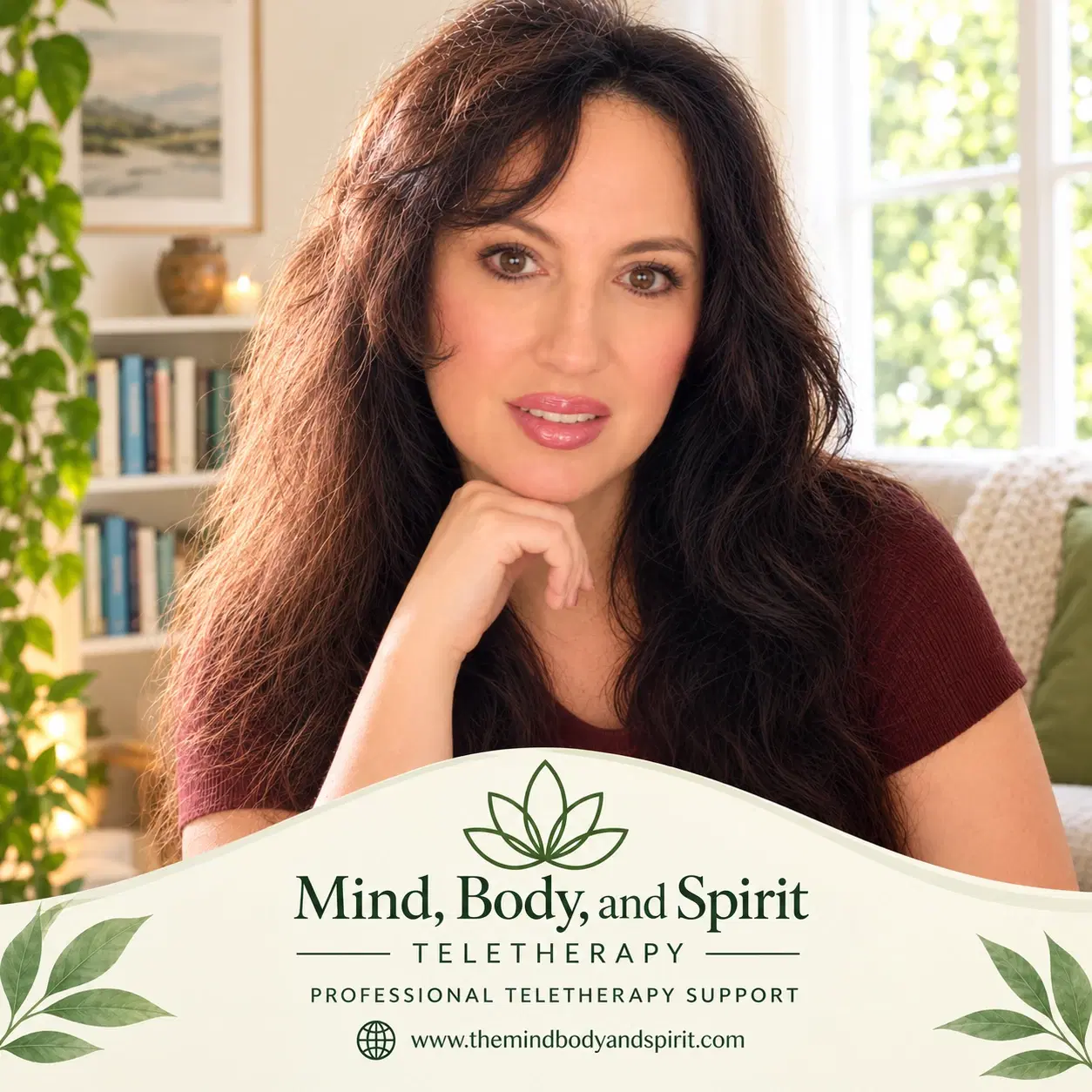
In 2026, upon registering as a Mental Health Counselor in Washington, Natalia launched Mind, Body, and Spirit TeleTherapy—an organization accredited by the International Association of Therapists (IAOTH) dedicated to promoting mental, social, spiritual, and behavioral health for diverse communities.
A Practice for the In-Between
Today, Mind, Body, and Spirit TeleTherapy represents the continuation of Natalia's journey and philosophy.
It is a space for people who may find themselves navigating profound transitions—whether related to culture, identity, relationships, career, belonging, trauma, spirituality, or purpose.
Our work is especially informed by the experiences of immigrants, expatriates, Third-Culture individuals, global health and humanitarian professionals, and people navigating significant life transitions and relational wounds.
We understand that sometimes the most difficult part of change is not knowing exactly who you are becoming.
That is where our work begins.
We create a compassionate and supportive space to explore the territory between where you have been and where you are going.
You do not have to navigate that journey alone.
Mind. Body. Spirit.
Three dimensions. One whole person.
Bridging Worlds.
Credentials
- B.A. in English Philology (Major in English Linguistics & Minor in English Literature) from the University of Cádiz, Spain & SEA-EU + 1-year job placement abroad (Leeds, UK) for research in foreign language and diverse culture.Recognized in US equivalence as M.A. in English Linguistics and B.A. in English Literature by Educational Perspectives in Chicago, IL.
- Master's in Education (MAES) from the University of Cádiz (UCA), Spain and The European University of the Seas (SEA-EU).
- CLTA/Master level in the Teaching of Languages (Spanish Language & Culture) from the University of London, UK, with components from Goldsmiths and the Instituto Cervantes, London.
- Graduate coursework in Theological Studies (two semesters) from the University of Loyola, Maryland.
- Certificate Program, Career Counseling - Employment Department Junta de Andalucía, Cádiz, Spain
Note: These credentials have been verified by UCA (University of Cádiz) and SEA-EU (The European University of the Seas) and are proof that Ms. Zavislak's level of studies exceeds master's degree level.
Professional Certifications
(2021-2025)
Business & Legal
- Certificate of Formation in Washington State (UBI: 605583698)
- Business License (UBI: 605583698 001 0001)
- National Provider Identifier (NPI: 1134084031)
Telehealth & Telebehavioral Health
- Washington State Telemedicine Training Certificate
- Suicide Risk Assessment and Management in the Age of Telehealth
- Utilizing Telehealth: A Brief Treatment Model and Wellness Approach
- Culturally Informed Services to Alaska Natives
- Burnout & Telemental Health: Re-connecting to Ourselves
- TeleBehavioral Health for Homebound Older Adults with Cognitive Disorders
- TeleBehavioral Health 501: Best Practices for Telemental Health with Clients who are Deaf, DeafBlind and/or Hard of Hearing
- Adapting Cognitive Behavioral Therapy for Psychosis (CBTP) for Telehealth Delivery
- Burnout at the Intersections: Race, Justice, and Behavioral Health
- TeleBehavioral Health 2026: Telehealth with Neurodivergent Patients
Psychotherapy
- Psychodynamic Psychotherapy Certificate
- Professional Psychotherapy Diploma
- Gestalt Psychotherapy Certification
- Cognitive Behavior Therapy (CBT) Life Coach Certification
- Rational Emotive Behavior Therapy (REBT) Mindset Life Coach
- Transgenerational Practitioner
- EMDR Therapy for PTSD & Trauma
- EMDR Therapy for Stress Management
- Professional Member - IAOTH (International Association of Therapists)
- Acceptance and Commitment Therapy (ACT)
Psychology
- Transpersonal Psychology: Trauma & PTSD Healing
- Developmental Psychology
- Psychology Diploma: Anxiety and Panic Attacks
- Heal your Inner Child Diploma
- Master Mindset Life Coach (Advanced Training in Psychology, Emotional Intelligence, and Confidence)
Counseling
- Grief & Bereavement Counseling
- Professional Counseling
- Life Transition Counselor & Coach
- Professional Counseling Diploma for Sexual Abuse
- Professional Anger & Aggression Counseling
- Depression Counseling Diploma
- Couple Therapy Counseling
Coaching
- Trauma-Informed Coach
- Therapeutic Coach (NLP, Hypnotherapy, Psychology, EFT, Mindfulness)
- Career Coach
- Master Relationship Coach
- Master Spiritual Life Coach
- Master Law of Attraction Coach
Hypnotherapy
- Associate Hypnotherapy Practitioner
- Member - International Guild of Hypnotherapy
- Diploma in Past Life Regression
- Diploma in Future Life Progression
- Professional Hypnotherapy for Mind, Body, and Spirit
- Past Life Regression and Therapy (Past Life Therapists Association) [2023-2025]
Complementary Therapy
- Health and Nutrition Life Coach
- Yoga Life Coach
- Master Wellness Life Coach Certification: Advanced Training in Health, Nutrition, Diet, Fitness, Mindfulness, and Wellness
- Singing Bowls for Body Work, Sound Healing, and Energy Work
- Indian Head Massage Diploma
- Hot Stones Massage Certificate
- Aromatherapy for Massage Therapists
- Board-Certified: International Practitioner of Holistic Medicine (IPHM)
Healing
- Reiki Master Certification
- Crystal Reiki Master/Teacher
- Kundalini Master Certification
- Zodiac Reiki - Master Level
- Rising Star Reiki Advanced Practitioner
- Violet Flame Reiki Master
- Sound Therapy Certification
- Shamanic Life Coach
- Registered Healer - International Natural Healers Association (INHA)
- Registered Shamanic Practitioner: The Foundation for Shamanic Studies (FSS)
Psychic
- Professional Psychic Certification
- Akashic Records Certification
Natalia's Therapeutic Artworks
In Art Therapy, she combines shamanic art, Reiki symbols, and powerful images of her spiritual journey into therapeutic artwork.
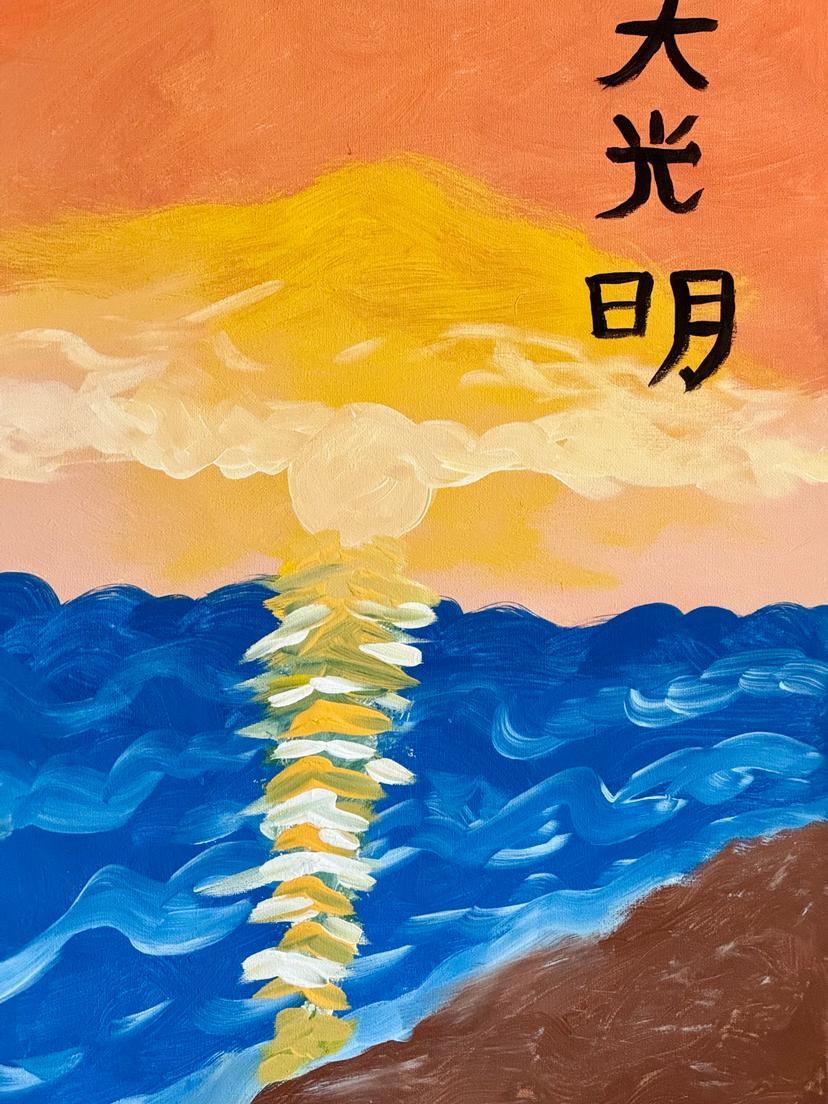
The Great Awakening
The reiki master symbol, Dai Ko Myo, represents a "Great Shining Light" and is linked to spiritual growth and enlightenment.
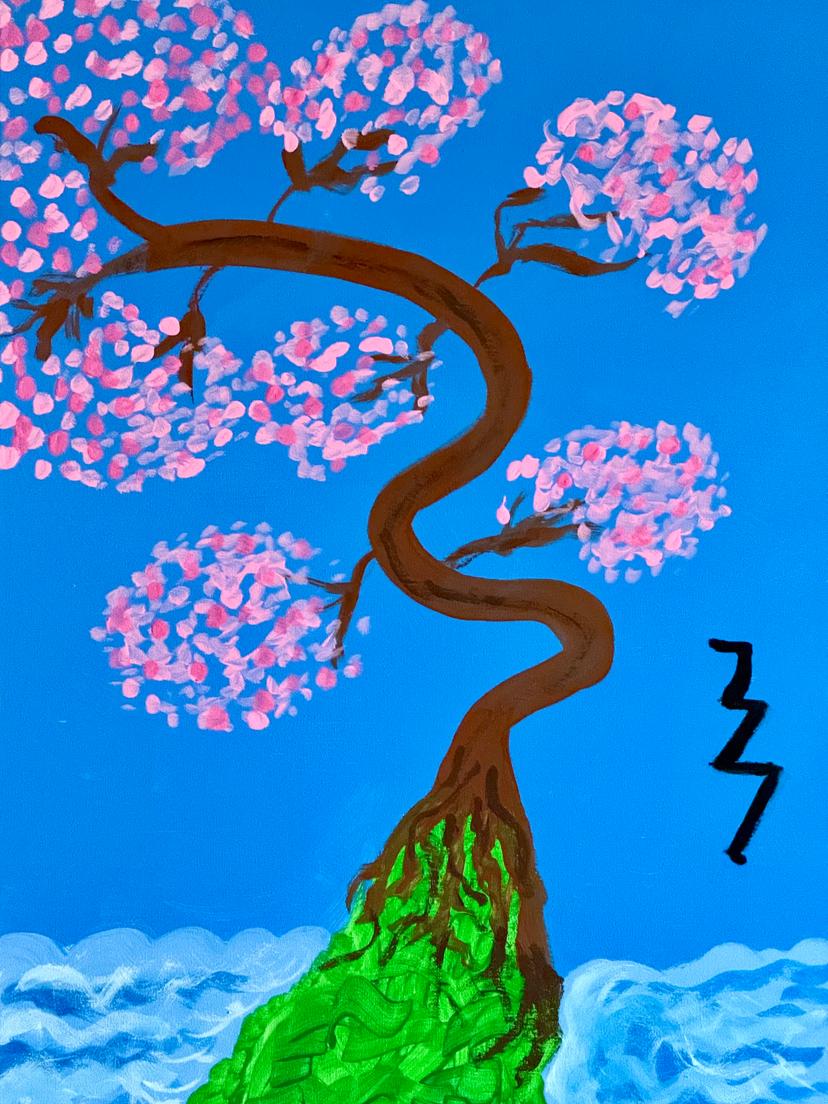
Healing Ancestral Roots
The reiki symbol Raku, also known as the Fire Serpent, is used to help people feel grounded, let go of old habits, and achieve inner peace and balance.
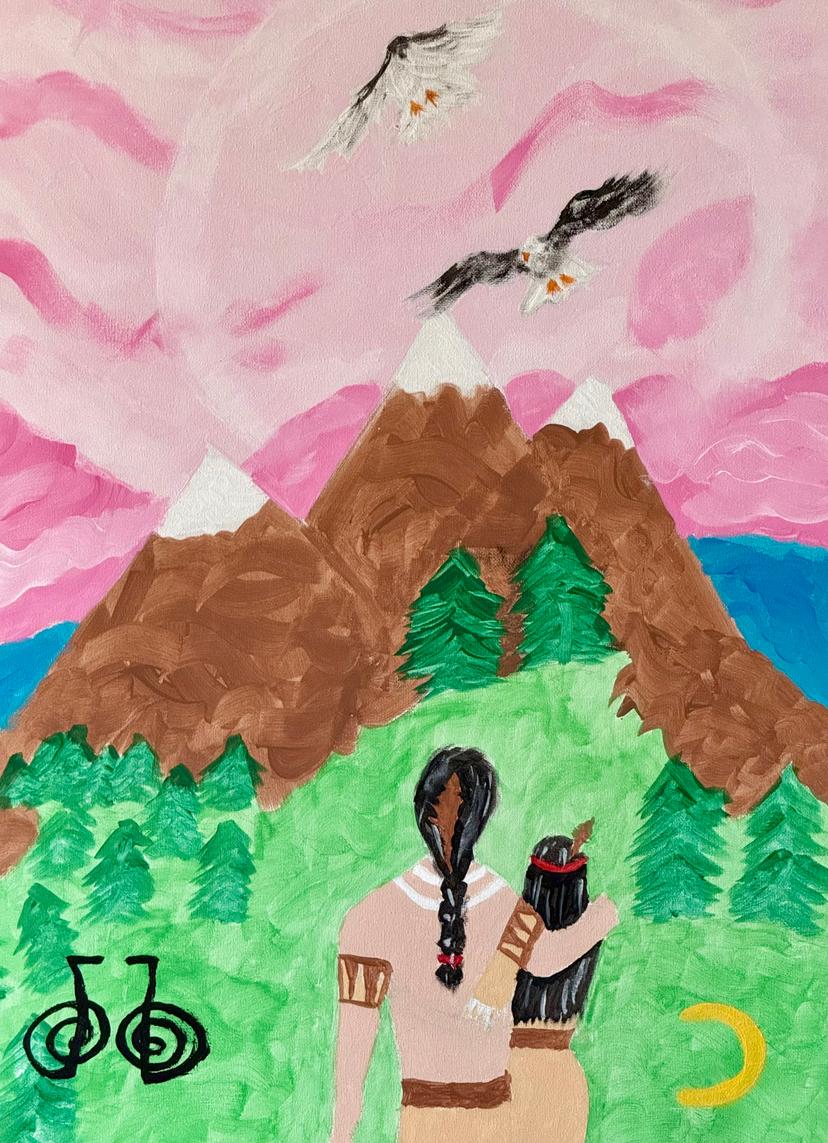
Path to Heaven
Symbolizing the combination of masculine and feminine qualities, which Carl Jung called the integration of the animus and anima.
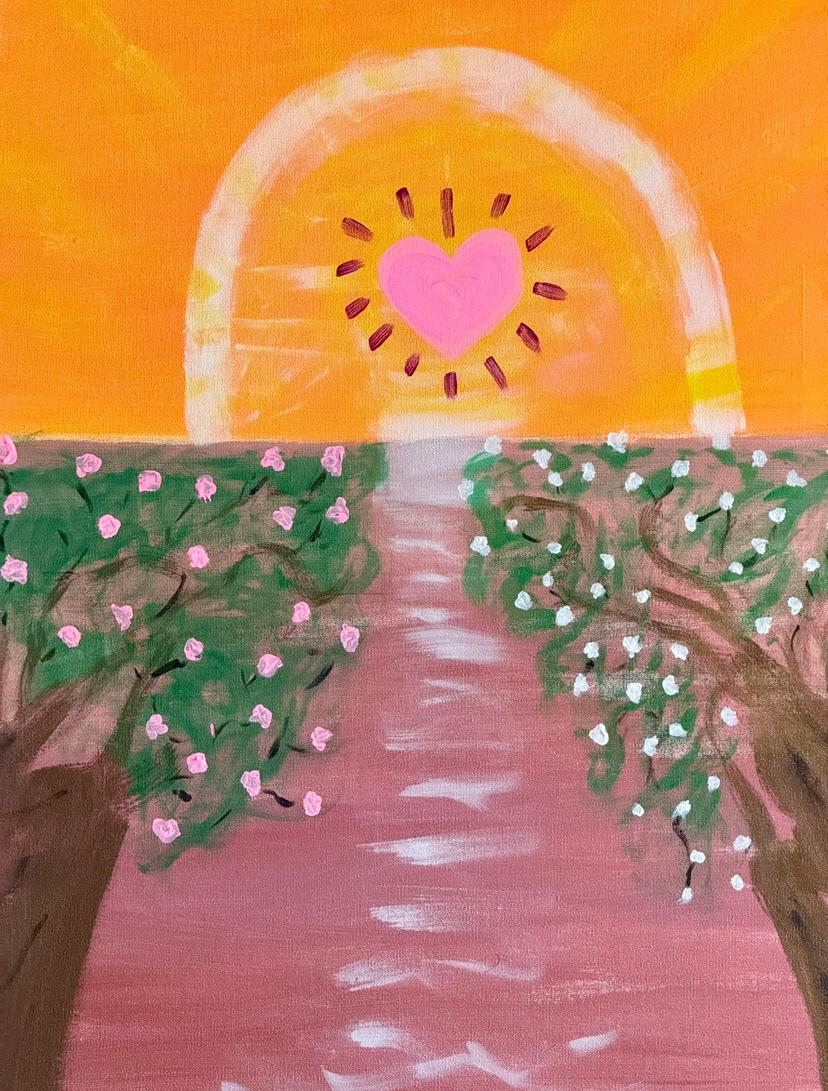
The Map of the Soul
Symbolizing the journey back to feeling whole and re-embracing love.